

• The Starless River Christmas Bookshelf

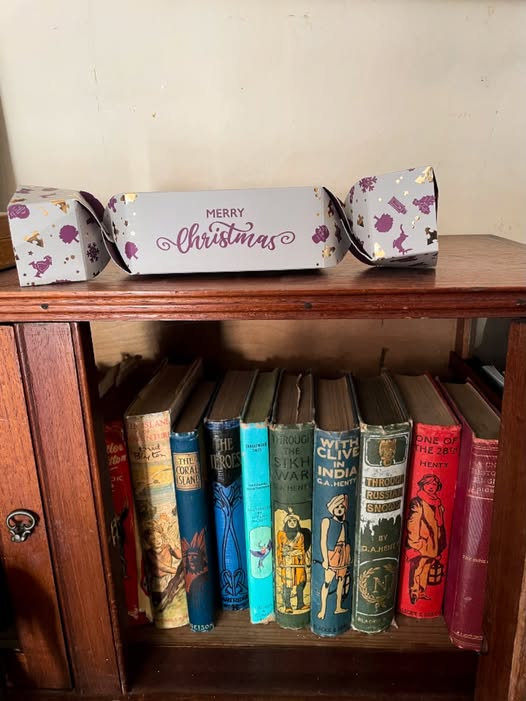
    Keep your eyes peeled for three weeks of special offers on selected books, starting on the 28th

    Click here for details

  • CNCC Underground Refresher-This Sunday. Space available

    A great chance to polish up your SRT skills with a patient and experienced trainer.

    Click here for details

Grebe Swallet / Mine.

The Old Ruminator

Well-known member
This is a fascinating little cave for a number of reasons. Firstly one must admire the tenacity of the current incumbent as he has taken great care in looking after the cave and its surroundings and he had relentlessly pursued the current dig often doing solo trips to do cementing. Secondly we see Willie Stanton at the height of his conservation techniques as he built walls to protect fragile mud inscriptions and formations. We also see the work of the eighteenth century miners as they toiled to extract the galena lead ore. Oh and one never knows. This could be the site of the next Mendip great discovery. Anyway the photos were taken on just the one trip so dont expect too much.

First the macro mud inscriptions from another thread.

Small child's finger marks.


Henry Young 1753 preserved by Stanton.


Bug mud trails in silt bank.


Stanton's remarkable walls with inscriptions behind.


Selfie shot showing interior of wall and construction technique. The walls were built in layers presumably over time to enable each layer to go off.


Chris Binding , the cave owner, and Kevin Speight at the entrance which is 100m from the road crossing Velvet Bottom ( ST 5044  5550 ).


" Blinky Binding "at  the entrance. ( He blinked through most of my shots )


Blinky gets going ---


Ahh. The price you pay -- Blinky mixes cement to be carried to the end of the cave. Luckily with me bad hand and all I was on light duties.


Rob Harper negotiates the entrance series. This might be " The Galena Ruckles " everything soon steamed up so the photos went down the pan. As it were.


C.B. ( Blinky ) gives Rob some info on the cave. I had better be more respectful as Blinky er Chris is a moderator on here.


" The Proper Photographer " brings up the rear.

 
Down in Semicostatum Ruckle - the scene of the current dig in somewhat arduous conditions.

" Here Blinky er Chris that big boulder just wobbled." "I will chuck more mud on it " says he.


Here look Semicostatum is something to do with fossils. I looked it up but did not understand a word of it.

Mr Binding approaching the end of the dig.


The absolute and utter end ( currently ) of Semicostatum. My foot on the next rock to come out.


The way on to glory, master caves,and adulation at the J Rat awards.


Even more cementing though first.


This area of the cave has been Chris-tened " The Garden of Earthly Delights ". All a foul lie to deceive the unwary caver into lugging cement there.

The positive bit.
The terminal dig is fault aligned and in gently dipping limestone offering the chance of a long system perhaps intercepting areas unknown beyond the end of Upper Flood Swallet.

We diggers all have our dreams.
 
Mr B. departs the end to mix cement.


He waves a muddy paw goodbye.


At the mixing station. Water comes down the dig in that there hose. " Please don't knock the connectors ". "Eh ? Oh sorry."


More deposits from the Cementocine Era.


" Is it quite safe in here ?" Ummm. The only time he laughed.

 
The proper photographer descends the dig.


Me -- I am off for lunch.


Off solo for photos after lunch. Umm chicken and mushroom pie and ginger beer.


Now look at that. A Stanton wall. Also a slab cemented in the roof to protect straws.


Small childs grab mark.


Umm. Willy might have been cross about that.


Within These Walls.


Also bug trails here.


This Way.


That Way.


The Other Way.


The Combatants.

Rob Mudface followed by Kevin Sod The Glasses Speight.


" I am going to stick that camera ---- " Well really !


Mr all innocent Blinky Binding.


The proper photographer Mr A. P. Glanvill of numerous awards for meritorious photography but on the day whose lamp had stuck in flashing mode. Thank goodness Blinky had a spare our we would all have collapsed in fits.

 
Meanwhile back to the mine.

Galena ore.


Chiseled gully to collect water.


Cementocine era I think.


Mr B. approaching " The Duck ".


" Oh do hurry up you old fool "

" Oooo hang on I can see a great picture. I really can ".


Fini

Old Ruminator Productions 2013 ( Just )

No cavers were harmed in the making of this thread.

Thanks to Blinky Binding and Kevin Speight for the tour. Rob -- well for just being Rob.

Also A.P. Glanvill for all the amusement.

Oh.

And Mrs Ruminator for letting me go. :bow:

Happy New
year
all.
 
Those signs explaining the various features - do you know what they are made of and what was used to write the lettering? I have a site where it would be good to do something similar!
 
Interesting to see that the galena is water-worn and this suggests what they were doing was digging through sediments rather than breaking virgin veinstuff. If this is what the miners were on with then it's possible the garland (picked channel) was to collect water for washing ore rather than for keeping it out of workings? I like Willie Stanton's approach to preserving the inscriptions!
 
I think the chiselled gulley is to wash tools as it runs on to a working bench on a ledge. I have a photo of it somewhere.  The presence of Grebe Swallet was kept secret for many years (you won't find it in previous MU's) as Willie Stanton was worried re vandalism and souvenir hunting. Applications for a trip should be directed towards Cap'n Chris who would be glad of assistance with bags of cement etc.I am sure.
 
AR said:
Interesting to see that the galena is water-worn and this suggests what they were doing was digging through sediments rather than breaking virgin veinstuff. If this is what the miners were on with then it's possible the garland (picked channel) was to collect water for washing ore rather than for keeping it out of workings? I like Willie Stanton's approach to preserving the inscriptions!

The above is basically true. Stanton observed that the abraded lumps of galena ore in Grebe were present in a variety of sedimentary matrices filling voids in the limestone. These probably originated from primary veins that once existed above the level of the current plateau . Possibly these formed in association with Neptunian dykes and this process may well account for most of the galena deposits on Mendip. ( Poc UBSS 19 1991 )

Stantons observations and a survey to 1990 can be seen here -

http://www.ubss.org.uk/resources/proceedings/vol19/UBSS_Proc_19_1_43-65.pdf

Interestingly Stanton believed that both Henry Young and John Clark ,whose signatures in the clay we see dated 1753, were children as they are associated with some of the small finger marks. Possibly they were the children of local farmers who sought galena ore at the end of the mining era. The miners or local visitors at the time certainly removed many of the speleothems as souvenirs or more likely to sell to those keen on constructing their own grottos which were in vogue at the time.

 
What's with the redacted bit in the image after the chiseled gully? Did you photograph something the NSA/GCHQ/Blinky Binding did not want reported?
 
Nothing redacted by me Spike except in the pursuit of artistic merit. We see there a reflective pad which I think Stanton placed there to denote an area of particular interest. The channel does run down to a working area or bench where we see a slab of sandstone possibly used to sharpen miners tools.
 
A fascinating place, thanks for the photos Mr Old Ruminator. The last (and only) time I went down Grebe was a couple of weeks after the 1968 flood & the entrance looked the same as in the Mendip Registry photo. It was clear the place took one hell of a lot of the floodwater that zoomed down Velvet Bottom (although clearly not enough to prevent the road embankment from washing away). It was pretty scary and loose inside & we didn't penetrate very far into the cave before chickening out.

The good Cap'n's been a busy boy for sure; I wouldn't mind a trip in there at some stage, after he's cleared up all that horrible mud of course...
 
I'd be more inclined to say the bench was for ore processing than for tool sharpening, but I haven't yet read Willie Stanton's account; I'll have a look later.
 
Back
Top
