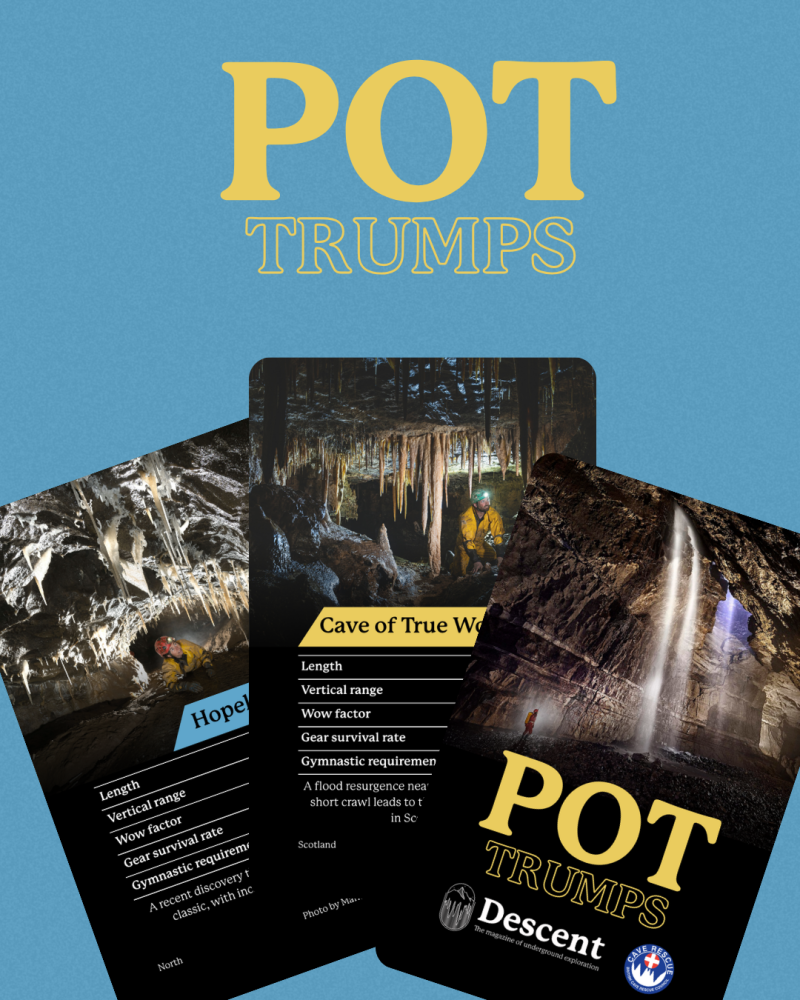
• POT TRUMPS!

    Descent are delighted to introduce their new cave-themed card game – Pot Trumps – to the caving world.

    £5 from the sale of each pack will be donated to the British Cave Rescue Council.

    Click here for details

Sough Top

HardHat

New member
I was out walking at Sough Top the other day and noticed a sleepered shaft not far from the Severn Trent site near the trig point - I cant seem to find any info on mines in that area. I don’t suppose anyone would know what mine(s) this may be a part of? TIA
 
CCT on the right track ?
Rieuwerts, James H. (1966); List of Soughs of the Derbyshire Lead Mines; Mining History; 03-1 Aug; Peak District Mines Historical Society; p. 16.
was Intended to drain the Harda Head Rake on the Wham in Taddington LIberty

Could your shaft be on the Harda Head Rake??

https://her.derbyshire.gov.uk/Monument/MDR8794 calls "Harda Head" "Hardyhead" and offers:

Sough intended to dewater Whain [spelling correct?] rake and Hardyhead rake. The first sough is dated 1653, but maybe in existence by 1642, the second is dated 1723. Known as Hardyhead sough, then as Harda Head sough. The Whain sough, measuring ore in 1728 and 1735 to 1737 maybe the same. All soughs would have extended southwards. (1,2).This comprises an outlet to a sough that is still open. A small entrance opening gives access to a small dry walled reservoir chamber, with an opening at the back leading to the sough tunnel. This runs southwards into the hillside. The sough was in existence by 1653 and is shown on a map of 1690. It was dug to drain Wham Rake, earlier known as Hardall or Hardyhead Rake which is c.250m away. A second sough, now lost and presumably run-in, probably ran from the same point and was either a reinstatement of the earlier sough or more probably a separate level, running south-westwards along Grove Rake to its junction with Wham Rake. This level was started in 1723 and ore was being removed between 1728 and 1737 (1). (3).

250m south puts your shaft on the Harda Head Rake - named Wham in her quote.
 
There are two soughs there; the older 17th century one still flows into the back of the covered reservoir through a small opening, there is a concrete cap with a steel lid on it and a seriously rusted padlock a little to the south, put in when PDMHS attempted to dig the sough in the 1980s. From what I know of this, the sough was found to be badly collapsed in the Upper Millers Dale lava and the dig was abandoned.

The later early 18th century sough is at a slightly lower horizon but is completely collapsed, there's a line of small air shaft hillocks following the wall line to the north of the reservoir, the tail was probably around where the trees end as far as I could tell when I had a proper look at the site.

There's also a shaft on Wham Rake further south adjacent to the log washer base, which was full of rubbish when I looked at it with Steve Thompson ~15 years ago.

 
There are two soughs there; the older 17th century one still flows into the back of the covered reservoir through a small opening, there is a concrete cap with a steel lid on it and a seriously rusted padlock a little to the south, put in when PDMHS attempted to dig the sough in the 1980s. From what I know of this, the sough was found to be badly collapsed in the Upper Millers Dale lava and the dig was abandoned.

The later early 18th century sough is at a slightly lower horizon but is completely collapsed, there's a line of small air shaft hillocks following the wall line to the north of the reservoir, the tail was probably around where the trees end as far as I could tell when I had a proper look at the site.

There's also a shaft on Wham Rake further south adjacent to the log washer base, which was full of rubbish when I looked at it with Steve Thompson ~15 years ago.

Appreciate the insight! nice to know as I have almost no knowledge of the area - I’m not going to have a rummage and see if i can find a PDHMS article on it😁
 
There are some bits in old PDMHS newsletters from the 1980s but I don't think I've still got the exact references - Steve Thompson found them and also contacted some of the original diggers but a lot of his research notes were lost after his death.
 
Back
Top