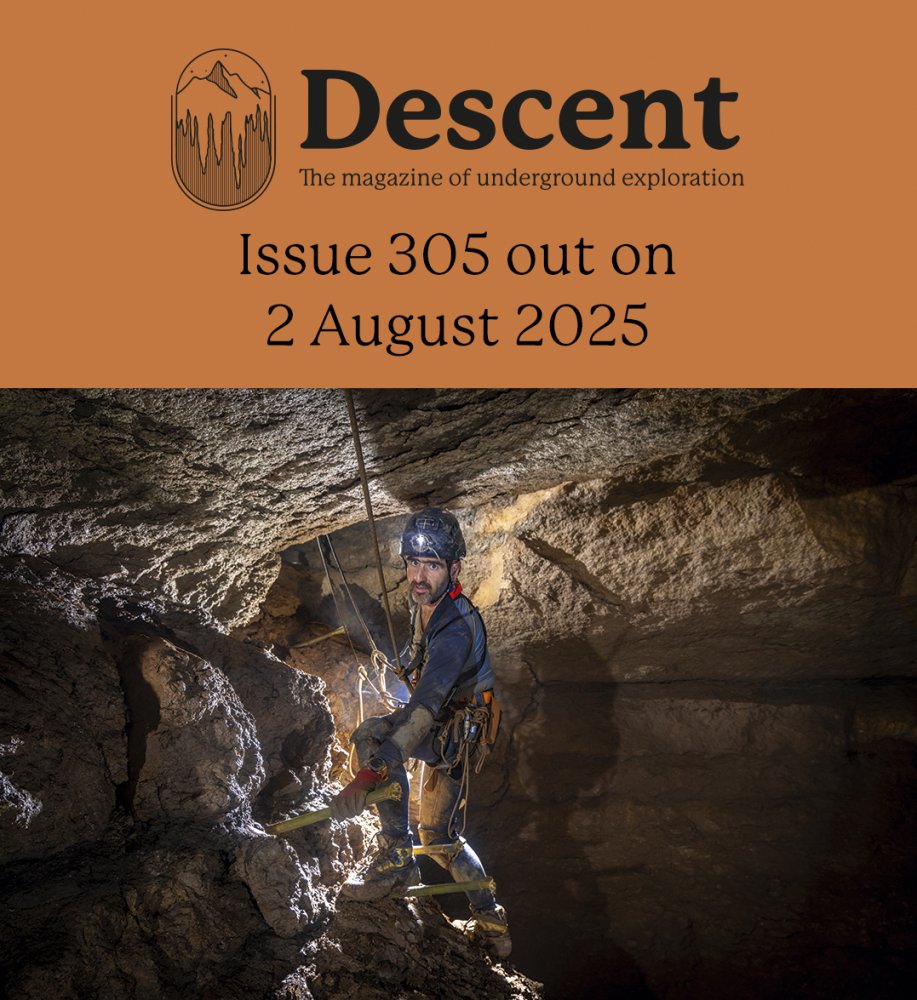
This is a 2-part trip report, written by MarkR. I'm just posting on his behalf.
Last year we spent a long weekend pumping and digging Rowter Hole Sump and after a lot of hard graft, only just managed to get through towards the end of our Saturday trip. We were there long enough to pull a pipe through and get a look down a pitch, you can read all about that last pumping effort here-
https://ukcaving.com/board/index.php?threads/rowter-hole-update.25803/post-397972.
At the time we were exhausted, it was a massive effort for everyone involved and the thought of going through it all again any time soon was difficult to entertain. At some point over the following months, weeks, days, or maybe even hours however, as the fatigue, bruises and aches subsided the ever-present draw of the undescended pitch took hold, and the inevitable plans were made for a return in the summer of 2025.
Friday
Ben Enticknap, Mark Wright, Mark Sims, Tim Nixon and Myself were all at Rowter farm on Friday 25th with 10 bags, 6 drag trays and 5 extremely heavy coils of cable to take down. We had two generators for the surface (primary and backup). Mark S, Ben and I headed underground, placing power cables and data cables as we went. Tim N and Mark W turned up at about 11:00 with instructions to turn on the generator and send us some power down. The rigging of cables went well and we had it all in place within a couple of hours. Shortly after, contact was made with the surface, allowing us to enjoy 13 meg Wi-Fi down the cave- slower than last year, but still adequate.
This time around we had the major advantage over 2024 in that we had managed to pull a pipe through the sump before we left it. That would do away with the need to pump into a holding pond and then onwards into the Ice cream Trail with a second pump. This removes a big element of complexity and unreliability from the system. We could now divert the main Rowter stream through the sump and inject our pumped water into the same line and send it off beyond. We also learned last time that by Sunday we are all knackered and we had far too much kit to take out. We planned what would be required much more carefully this time, taking only what we would likely need and adding a rescue tripod and electric ActSafe rope winch to the kit for hauling out of the entrance at the end. Last time we also had questions about the air quality so we also took a ventilation fan and 30m of flexible ducting down with us this time too. Having comms with surface was a big element of this project, not only did it keep the whole team feel connected, it was practically and psychologically necessary if we were to spend any time exploring beyond that sump, knowing we were dependent on a continuous supply of generator power to run the pump and air.
We pumped the sump to the bottom on Friday in about 2 ½ hours. We had left a pipe screwed into the bottom of the sump when we left last time, the stream from above was left blasting into this and we were excited to see how well it had kept the liquid mud at bay for us over the last 10 months. We were sorely disappointed. The bottom section of the sump had changed, some large mud banks had been washed away- presumably by the swirling current and bubbling from our ‘bottom blaster’ pipe. Instead of being pushed through the sump it had mostly settled in the bottom, meaning we were in for another hard, disgusting shift of slop digging. Having verified the system worked and comms was working well with the surface, we left at a very civilised time and were out for around 17:00 to recover and prepare ourselves for the big Saturday push.
Saturday
On Saturday the same team was joined by Mike Yaxley, Chris Adams and Tim Allen. We had a 0900 start and all but Mark W and Tim N headed underground. We re- drained the sump again, it having refilled by a metre or two overnight and the slop hauling commenced. Mark S and I were in wetsuits, this time with a Meander over the top, having learned last time that we were otherwise going to destroy our wetsuits. The rest of the team strung out up the muddy sump passage and the drag trays started moving. It was shit. People had to manoeuvre trays of liquid slop up an uneven slope, around coils of hose and wires, over uneven rocks then carry them up a rocky slope and dump them in a holding pool in the main chamber. It was hard work for everyone and a bit demoralising to be re- digging the bottom of the sump once again having toiled away at it so hard last year. Progress was painfully slow and it simply took time to get on top of things. The sump eventually broke, with a long, loud glug-glugging sound but it took a few hours to get it to a point where we were happy to pass. Having that passage in a state where we could safely get through and reliably keep it open was critical because this time around we had a lot of work to do on the far side. The trick was to get a hole dug in the near side of the floor in which to drop the pump in its strainer box, allowing us to drain the water towards us. After a few hours lying in the slop and scraping handful after handful of mud out of the bottom of the sump, we were in a place that Mark S and I were happy to have a go at passing. We paused for some lunch, opting for hot drinks, hot food and bread to recharge us.
With the air blower running into the bottom of the sump and the pump periodically turned on to drain the always filling puddle, Mark and I went through. The initial sandy slope was shallower than we both remembered it, though still quite snug. The muddy slop slope beyond that was just as bad as we remembered it, it is actually quite narrow in one place and the thick ooze you have to lie on to get up it constantly wants to slide down in big globs. We took three tackle bags of gear and two scaffold poles with us, which wasn’t that fun. Once up the other side, we were both frequently checking in on each other for signs of air quality. As last time, we both arrived in the narrow rift passage very out of breath and with hearts pounding, we still can’t be entirely certain that wasn’t fatigue, excitement and a tinge of nervousness but the air was very steamy in there and definitely not 100% normal. Whilst we were through the rest of the team were manning the pump and setting to the bottom of the sump, pulling out as much spoil as they could to enlarge the space we had to get back through. The bigger the space, the longer we would have before water levels rose to make it impassible again. Our fates were very much in everyone’s hands at that point, from the pump operator, through the drag tray team, spoil tipper, comms man and all the way through 200m of cable to the surface where Tim and Mark W were at the other end of the line keeping the generator running and ready to swap to the backup in the event it went down. This really was a big team effort, Mark and I were initially the only ones through, but everyone was well and truly exploring this cave now.
When we got a look at the pitch head last time, the right-hand wall was very shattered, I levered a very large block off it with great ease and it jammed part way down the pitch at a narrowing. The very blurry screenshot below shows the remaining flake of rock with huge crack down the back and our intended solution to stabilise that in place before exploring- a couple of scaffold poles leaning across the passage, pinned in place and braced together.
Thankfully we had the scaffold poles with us and Mark fetched one from the brown porridge floor at the top of the sump for me to use as a lever. 10 minutes or so later and after a lot of sweating and grunting on my part, the boulder finally let go and led the way down the pitch. It was followed by quite a lot more spoil from the rubble slope it was partially supporting as I made the area ‘safe’ and once we identified the two half adequate sections of good rock, we put in another bolt for a Y hang and one for a deviation. It was time to go and see what lay beyond.
To say this was exciting might be an understatement, it also felt a bit serious, but it was enormously reassuring to know who was just behind me in the cave and on the surface and to know we had a good plan and had taken sensible precautions. I descended the pitch and almost at once knew there was more, I saw the cave continuing to the west and heading steeply down another pitch. I landed on a solid floor which was littered with the rubble from above and stepped sideways to the head of another pitch. I shouted for Mark to gather some more rope and follow down.